
In India, domestic airlines have not secured any relief from the government and are reporting 50-55 per cent loads as domestic air travel resumed on May 25 after two-month suspension.

From auto, refrigerator, and mobile handset makers to real estate firms, companies are tying up with banks to dole out attractive finance schemes and discounts to make buying more affordable.

At the heart of the matter are revenue-share rental agreements that retailers are mooting over fixed-rent contracts that they say are unsustainable, given the revenue loss they've suffered during the lockdown.

Clearly, the domestic market has taken sharp knocks in April, which is likely to be visible in May as well, said analysts tracking the market, as FMCG companies are grappling with improving capacity utilisation and dealing with labour shortage.

The hospitality and tourism sector is among the worst hit because of the pandemic, and is unlikely to recover any time soon as people continue to be cautious of going out in a crowded places.

'While OTTs are a reality, big film producers will prefer a theatrical release before a digital one.'

Almost 70 per cent of alcohol distribution in India happens through liquor vends or shops, while 30 per cent happens on-premise, that is, in bars, pubs, and hotels.
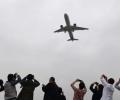
'Indian aviation cannot resume without at least three major airports being functional. If Delhi, Mumbai, Bengaluru, and Kolkata are shut, there is little chance that airlines will start flying even if the government gives the go-ahead.'

Radhakishan Damani is the only billionaire to see his wealth grow by around 20% during the lockdown.

Companies across the sector are restructuring payrolls of crew, cutting allowances, and extending leave without pay duration as they realise they will have more aircraft and employees compared to customers.

Companies from Unilever to Proctor & Gamble, Nestl, Coca-Cola and PepsiCo have all alluded to lockdown challenges in India and the globe as well as the impact it will have on April-June as well as full-year numbers.

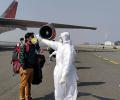
Airlines and airports are devising their own standard operating procedures, with a limited number of flights being planned to enable social distancing on ground and inside aircraft. The AAI guidelines also state that airport facilities such as smoking rooms, kids play areas, and prayer rooms shall be restricted to a limited number of people, to minimise gathering.

The 'mystery' of the education business sale by Cox & Kings is part of an Enforcement Directorate investigation, which is also examining the siphoning-off of funds to the tune of Rs 21,000 crore to dozens of so-called related-parties, highlighted by the forensic auditor.
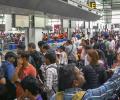
Extended check-in time, frequent disinfection every hour, additional queue managers at entry, exit, boarding point, check-in halls, security check areas and boarding gates, with social distancing markers and reminders - welcome to our airports post-coronavirus.

Retailers are also demanding that home delivery across all forms of retail should be allowed to ensure a level playing field.
Aircraft lease rentals are fixed costs and account for around 15 per cent of an airline's expense and since these are paid in dollars are also subject to currency fluctuations.
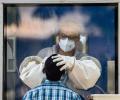
Mumbai, with an estimated population of nearly 20 million, has been testing 1,200-1,400 people per day. Delay in the delivery of rapid antibody test kits has forced the BMC to restrict its testing net.

Data from market research agency Nielsen shows that 152 new players entered the hygiene market in March as the lockdown was implemented to contain the spread of the coronavirus disease. The trend is expected to continue, the agency says, as hygiene and health emerge as key themes.
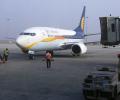
Though NCLT has extended window to find a buyer, bankers don't see much hope of a deal.
While FMCG companies were not barred from carrying out their operations during the 21-day lockdown, since most manufacture staples and essential products, capacity utilisation remained poor, owing to the restricted movement of raw materials, finished goods, and labour.
 © 2025 Rediff.com - Investor Information - Advertise with us - Disclaimer - Privacy Policy - Sitemap - Feedback - About us - Terms of use - Grievances